Yvette Bristow’s terminal cancer
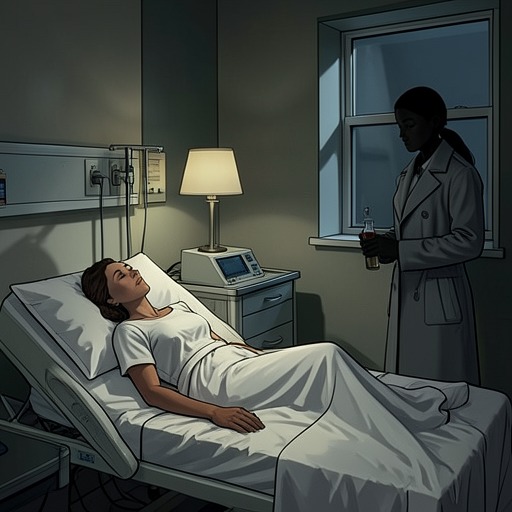
The Cuckoo's CallingYvette Bristow’s terminal cancer is both a grave illness and a pressure point in the family history surrounding Lula Landry’s death. Diagnosed while the adopted daughter was seeking her biological family, it became the reason John Bristow and Tony Landry opposed that search, and the condition that frames Yvette’s recollection of Lula’s last visit. The illness also leaves her memory of the crucial day uncertain: she does not remember Tony visiting, while recalling that John later woke her with supper and remained with her as they spoke about Charlie.
Diagnosis and Family Crisis
Yvette says Lula began looking for her biological parents in the year before her death, when Yvette had just been diagnosed with cancer. The tumor was already advanced, and she went straight on to chemotherapy. The diagnosis placed Lula’s search beside the adoptive family’s immediate crisis: John and Tony were very angry that she had started looking for her birth mother while Yvette was so ill.
The disagreement was not simply about whether Lula should seek her origins. Yvette describes John as devoted during her treatment: he drove her to and from the hospital and stayed with her through the worst periods. Tony, too, rallied around. Against this care, Yvette felt that Lula seemed to care about something else, and repeated Tony’s judgment that Lula was spoiled. She also turned the judgment inward, suggesting that her own response to losing Charlie had made her unable to do enough for Lula. The cancer thus enters the family story through both medical fact and a painful comparison of who stayed, who searched, and what each person needed.
Treatment and Dependence
Chemotherapy was not an abstract background condition. Yvette says it continued during the period when Lula was visiting her birth mother, and she recalls losing her hair. Her account places the physical consequences of treatment alongside Lula’s continued visits to her biological mother, a subject that had generated dreadful publicity and that Yvette found deeply upsetting.
The illness also narrowed Yvette’s independence. She says John helped with hospital journeys and stayed with her during the worst parts; later, she explains that she had taken pills and slept after becoming upset. John believed she took too many pills and told her off, though she understood this as his attempt to look after her. His care could be intimate and burdensome: he sat with her for a long time that night, talking about Charlie into the early hours. The narrative presents terminal illness through such concrete dependencies—transport, medication, sleep, and company—rather than through diagnosis alone.
Lula’s Last Visit and Conflicting Memories
Yvette remembers being very upset after Lula left. Talking about Charlie had distressed her, and she says Lula could see how upset she was but nevertheless left to meet a friend. Yvette took pills and slept. She does not remember seeing anyone else before John woke her with a supper tray; she remembers that he was cross with her, and that he stayed to talk about Charlie. In her recollection, Lula fell from the balcony while that conversation was taking place.
That account does not settle who was present earlier. Asked whether Tony had visited on the day Lula came, Yvette says she does not remember him, although she allows that she may have been asleep. Tony claims he was there; Yvette cannot confirm it. She describes him as visiting more often now that he knows she is dying, while putting down John, whom she says has always been good to her. Her memory of the day is therefore both intimate and limited: she gives a detailed account of distress, medication, sleep, and John’s company, but cannot verify Tony’s claimed visit.
Terminal Illness and the Investigation
When Strike later comments that Yvette seems very ill, the nurse confirms that she is very poorly and could die at any time. This confirmation gives urgency to Strike’s interview, but it does not make Yvette’s recollections complete. Her advanced cancer, chemotherapy, pain, medication, and sleep are relevant circumstances for understanding the limits of her memory; none independently proves that a particular visitor was or was not present.
The novel places Yvette’s illness beside other medical explanations offered in the investigation. John describes Lula’s history of poor mental health and her bipolar diagnosis as reasons the police and coroner saw her death through a pre-existing narrative of depression; Strike resists treating a person’s apparent future plans as proof that suicide was impossible. Eric Wardle similarly dismisses Tansy Bestigui’s claimed hearing as auditory hallucination, citing her cocaine use and the soundproofed windows. Rochelle, meanwhile, describes depression as an illness that can take hold. These accounts do not make the conditions equivalent, but together they show how diagnoses and symptoms can shape whether testimony is believed and how conduct is interpreted.
Yvette’s cancer does not explain Lula’s death or resolve the disputed account of the day. Its narrative force lies instead in the pressure it places on family loyalties and recollection: Lula’s search for her origins continues while her adoptive mother is undergoing chemotherapy, and Yvette’s illness makes both her vulnerability and the limits of her testimony impossible to ignore. The remembered scene of John sitting with her over the night, as Lula falls elsewhere, binds a private vigil to the investigation without turning that memory into proof of what Yvette could not recall.